in

THE ‘NO DUST, NO DOLLARS’ ULTIMATUM: Trump and Tehran Enter Brutal Brinkmanship Over Historic Deal to Reopen Strait of Hormuz

Inside the secret negotiations to lift the naval blockade, dismantle a nuclear threat, and rescue global energy markets from the brink.

Follow
( 0 Followers )
X

Follow

E-mail : *

The United States and Iran are locked in high-stakes diplomatic maneuvering, edging closer to a massive multi-nation framework aimed at halting the war in the Middle East and reopening the economically vital Strait of Hormuz. Following days of intense back-channel negotiations, a senior Trump administration official revealed that a broad template has been established to defuse the global crisis. However, a final signature remains heavily stalled. President Donald Trump has warned he will not be rushed into a subpar agreement, while fierce, conflicting pushback from Tehran over its highly enriched uranium stockpile threatens to unravel the tentative truce.

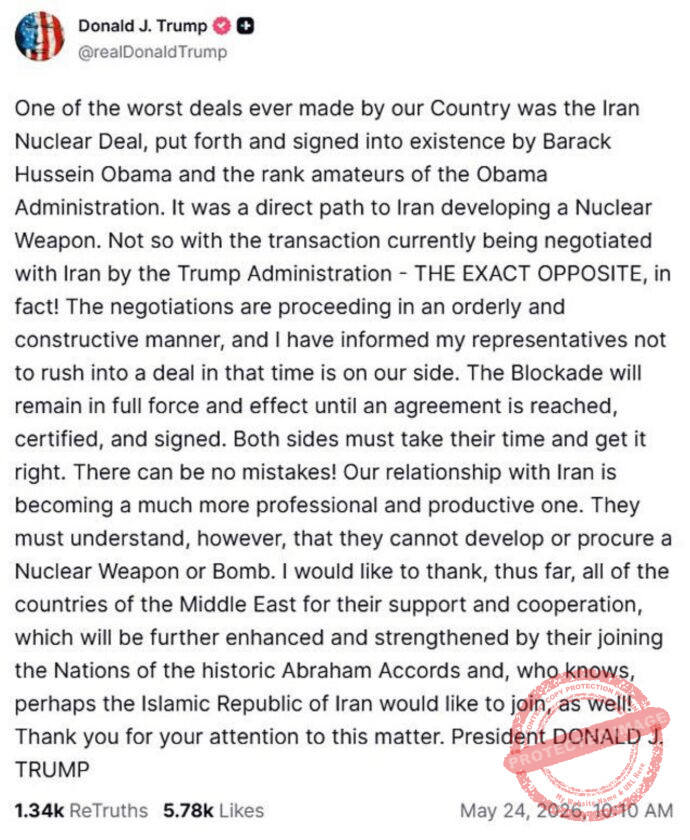
Taking to Truth Social to cool expectations after a weekend of intense speculation, President Trump emphasized that Washington is holding all the leverage. “The negotiations are proceeding in an orderly and constructive manner, and I have informed my representatives not to rush into a deal in that time is on our side,” Trump wrote. He made it clear that the pressure will not let up, adding, “The Blockade will remain in full force and effect until an agreement is reached, certified, and signed. Both sides must take their time and get it right. There can be no mistakes!”

The architectural backbone of the emerging deal, labeled by some regional outlets as a preliminary Memorandum of Understanding, relies on a proposed 60-day ceasefire extension mediated in part by regional partners like Pakistan. Under the drafted terms, the critical maritime chokepoint would see immediate, structural changes to relieve a choking global economy. Iran would agree to clear naval mines it deployed in the Strait of Hormuz and allow commercial shipping vessels to pass freely without arbitrary tolls. In direct exchange, the United States would suspend the aggressive naval blockade on Iranian ports that has been strictly enforced since April, opening a window for temporary, conditional sanctions relief on oil and gas.

The proposed agreement would also trigger negotiations regarding the partial unfreezing of roughly $12 billion in restricted Iranian assets currently held in Qatari accounts. However, the Trump administration has tied long-term economic relief to an absolute ultimatum, operating under a strict “No Dust, No Dollars” policy. White House insiders state bluntly that Iran will not receive permanent sanctions relief unless it performs on its nuclear commitments. The “dust” in question refers to Iran’s volatile stockpile of highly enriched uranium.

This nuclear demand has become the explosive center of the negotiations. According to U.S. and regional officials, the framework outlines a strict window during which Tehran must agree to dispose of its 440.9 kilograms of uranium enriched up to 60% purity—a technical hair-width away from weapons-grade levels. Proposed solutions include diluting the material on-site or physically transferring the entire stockpile to a third country, with Russia already offering to take custody of the shipment.

Tehran, however, is fiercely resisting the American narrative that its nuclear sovereignty has already been bartered away. While Western intelligence reports suggest an agreement in principle on the nuclear issue has been reached, Iranian Foreign Ministry officials have publicly thrown cold water on immediate concessions. Iranian state media notes that while progress has been made on a framework for broader talks, the nuclear issue is meant to be deferred to formal negotiations during the 60-day window rather than surrendered upfront. Tehran maintains that the peaceful use of nuclear science remains a sovereign right it will never fully relinquish.

The sudden diplomatic breakthrough has sent shockwaves through global markets, offering a desperate glimmer of hope for an end to the severe worldwide energy crisis triggered when the war broke out on February 28. Following the news of a potential truce, crude oil prices sharply plummeted, with Brent crude dropping back toward two-week lows. Even with an immediate signature, maritime logistics experts warn it will take weeks or even months for commercial shipping lanes to fully recover and for energy prices to stabilize back to prewar levels.

The looming “grand bargain” has also sparked intense political warfare at home, drawing sharp rebukes from Republican hawks who fear the administration might give up too much leverage to a hostile regime. Trump aggressively defended his real estate-style diplomacy on social media, blasting the 2015 nuclear agreement brokered under the Obama administration as “one of the worst deals ever made” and a direct path to a bomb. Trump promised his followers that the transaction currently being negotiated is the exact opposite, vowing to eliminate the nuclear threat entirely.

Simultaneously, international dynamics continue to complicate the final stretch of the talks. Israeli Prime Minister Benjamin Netanyahu reportedly held a high stakes call with Trump, warning the White House that Israel retains total freedom of action to defend itself against threats in all arenas, including its ongoing military campaign in Lebanon. While regional sources indicate the proposed ceasefire framework is intended to halt hostilities on all fronts, Israel’s national security cabinet is maintaining a strict “wait-and-see” approach. The fate of the global energy supply and the containment of a nuclear crisis now hang entirely on whether Trump and Iranian Supreme Leader Mojtaba Khamenei will sign on the dotted line.

Follow Us on Social Media

Author

Written by Shola Akinyele

Comments

Leave a Reply

Celtic Win Historic Domestic Double as Tottenham and West Ham Face Premier League Relegation Nightmare