Dangote Refinery Ends Naira Fuel Sales, Switches to Dollar Pricing as Petrol Prices Set to Rise
NNPCL crude supply shortfalls and renewed global oil market tensions push Africa’s largest refinery to price petrol in US dollars, raising fears of higher pump prices across Nigeria.
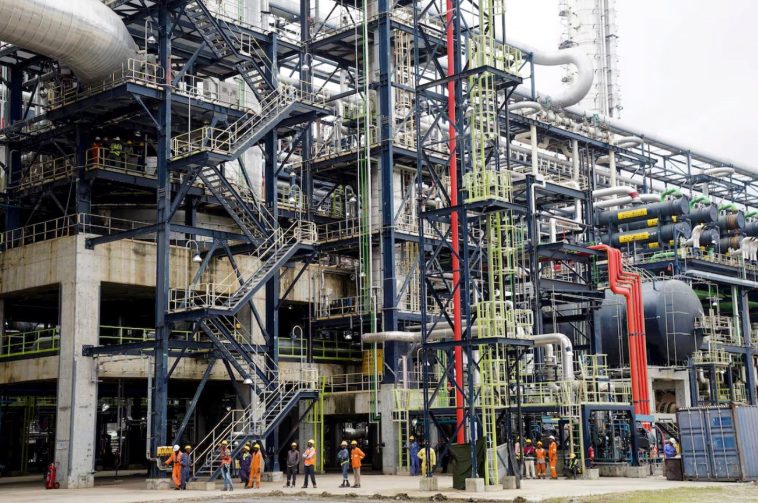
Nigerians could soon face another increase in the cost of petrol and other petroleum products after Dangote Petroleum Refinery officially ended the sale of fuel in naira, adopting the US dollar as the sole currency for transactions at its loading depot.
The new pricing regime, which took effect on July 13, 2026, means marketers purchasing Premium Motor Spirit (PMS), diesel and aviation fuel directly from the refinery must now pay in dollars, ending the naira-based system introduced under the Federal Government’s crude-for-naira initiative in late 2024.
Under the revised pricing template, petrol (PMS) is now priced at $0.779 per litre, diesel (AGO) at $1.087 per litre, Jet A1 aviation fuel at $0.942 per litre, while coastal petrol deliveries are priced at $1,044.62 per metric tonne.
Liquefied Petroleum Gas (LPG), commonly known as cooking gas, remains exempt from the policy and will continue to be sold under the existing payment arrangement.
Using the official foreign exchange rate of about ₦1,380 to ₦1,381 per US dollar, the new ex-depot petrol price translates to roughly ₦1,075 per litre before transportation costs, depot charges, marketers’ margins and regulatory fees are added. At parallel market exchange rates of around ₦1,420/$, the ex-depot price rises to approximately ₦1,106 per litre.
With retail petrol prices in Lagos recently ranging between ₦960 and ₦1,050 per litre, industry observers expect filling stations across the country to begin adjusting pump prices upward in the coming days.
The refinery’s decision follows persistent challenges with the Federal Government’s crude-for-naira programme, which was launched on October 1, 2024 to enable local refiners to purchase Nigerian crude oil in naira while selling refined products locally in the same currency.
The programme was expected to provide Dangote Refinery with between 13 and 15 crude cargoes monthly, reducing dependence on foreign exchange. However, industry sources say the Nigerian National Petroleum Company Limited (NNPCL) has consistently supplied significantly fewer cargoes, averaging only about five cargoes per month, with occasional increases to between seven and ten.
The shortfall forced the refinery to source most of its crude oil from the international market in US dollars while continuing to sell refined products in naira, exposing it to significant foreign exchange losses.
Industry insiders explained that the imbalance between dollar-denominated crude purchases and naira-denominated product sales had become financially unsustainable amid exchange rate volatility and rising global oil prices.
The announcement also comes at a time of renewed uncertainty in the international oil market.
Brent crude prices have climbed above $80 per barrel, reaching around $83 in recent trading following heightened tensions involving the United States and Iran around the Strait of Hormuz—one of the world’s most important oil shipping routes.
The increase in global crude prices is expected to raise refining costs worldwide, further increasing pressure on domestic fuel prices in Nigeria.
Analysts warn that the refinery’s transition to dollar pricing effectively reconnects Nigeria’s domestic fuel market to foreign exchange fluctuations, making petrol prices more sensitive to movements in the naira and developments in the global oil market.
The decision is also expected to increase demand for US dollars among petroleum marketers, placing additional pressure on Nigeria’s foreign exchange market.
Consumers are likely to feel the impact beyond petrol stations. Higher diesel costs could increase transportation and logistics expenses, while more expensive aviation fuel may eventually translate into higher airfares. Rising transport costs could also contribute to inflation by increasing the prices of goods and services nationwide.
Experts say future pump prices will largely depend on the stability of the naira, international crude oil prices, the Federal Government’s ability to restore adequate crude supply under the crude-for-naira arrangement, and competition from imported petroleum products.
Despite the expected increase in fuel prices, Dangote Refinery maintains that the move is necessary to ensure its long-term financial sustainability after months of absorbing foreign exchange risks.
With millions of Nigerians already battling rising living costs, attention is now focused on the Central Bank of Nigeria’s efforts to stabilise the naira, the Federal Government’s commitment to improving crude supply to local refiners, and further developments in the global oil market.
The situation remains fluid, with retail fuel prices expected to adjust across Nigeria in the coming days.

 Shola Akinyele
161 Views
Shola Akinyele
161 Views














 and then
  WhatsApp us