The Alaafin of Oyo, Oba Abimbola Owoade I, has reignited the longstanding debate over traditional supremacy in Yorubaland after declaring himself the number one monarch in the region, citing the historical influence of the old Oyo Empire and its contributions to Yoruba civilisation.
The monarch made the declaration during an interview with broadcaster Edmund Obilo on his State Affairs programme, excerpts of which began circulating widely on social media.
Asked whether the Alaafin was the supreme king in Yorubaland, Oba Owoade responded: “Alaafin is the supreme king in Yoruba land. Historically, yes I am. Alaafin is number one.”
He, however, insisted that he was not interested in competing with other traditional rulers for supremacy.
“I don’t fight for supremacy or whatever, you know, with anybody. But all I know is that historically, if you want to go by history and then the contribution of Yoruba civilisation, then I would say that Alaafin is number one,” he said.
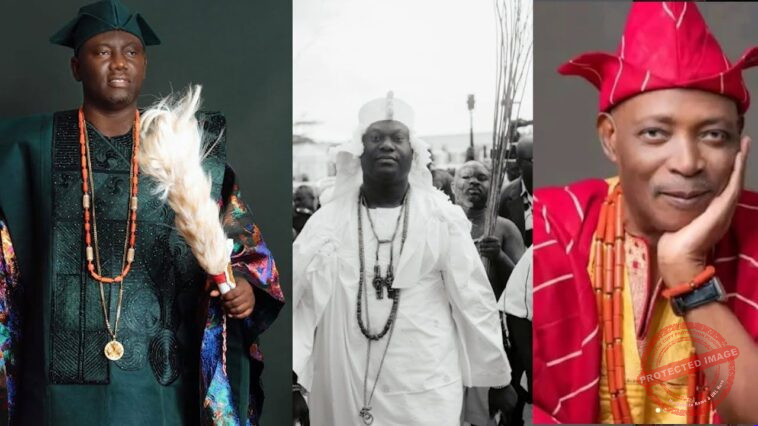
His comments have triggered renewed discussions about the historical positions of the Alaafin, Ooni of Ife and Olubadan of Ibadan, particularly concerning the political, cultural and spiritual leadership of the Yoruba people.
Historical records frequently cited in the debate include a document reportedly issued by the Secretary’s Office of the Southern Provinces on January 31, 1938, which listed traditional rulers according to first-class and second-class classifications.
The document, identified by its archival references as File No. 33044, Class Mark CSO 26, and Letter No. S.P. 11828/20, reportedly placed the Alaafin of Oyo at the top of the first-class category.
The Alake of Abeokuta, Awujale of Ijebu-Ode, Oba of Benin and Ooni of Ife followed in that order.
The Olubadan of Ibadan, meanwhile, appeared at the top of the second-class category, followed by the Owa of Ilesha, Osemawe of Ondo and Orangun of Ila.
The classifications have frequently been presented as evidence of the Alaafin’s historical prominence among traditional rulers.
However, the document’s original archival copy and the precise administrative basis for the classifications require independent verification. More importantly, colonial administrative rankings should not automatically be interpreted as proof that one monarch exercised direct traditional authority over every other kingdom.
The historical influence of the Alaafin is, nevertheless, well documented.
The old Oyo Empire emerged as one of the most powerful political and military states in West Africa, particularly during the 17th and 18th centuries. Through its cavalry, military organisation, commercial networks and political alliances, Oyo extended its influence across extensive territories in Yorubaland and neighbouring regions.
The Alaafin occupied the centre of this imperial political structure, exercising authority over Oyo and various tributary or subordinate territories.
The empire’s expansion significantly shaped the political development of several Yoruba communities, although the different kingdoms retained varying degrees of internal autonomy.
The Ooni of Ife, on the other hand, occupies a distinctive position in Yoruba history because of Ile-Ife’s association with the origins of Yoruba civilisation, spirituality and traditional kingship.
Long before Oyo became a dominant imperial power, Ile-Ife had established itself as an important political, economic, artistic and religious centre.
Even during the height of Oyo’s influence, Ile-Ife retained its spiritual significance. Historical accounts also indicate that Oyo maintained religious and ancestral connections with Ife.
This makes the historical relationship between the two institutions more complex than a simple contest over which monarch is superior.
The Olubadan of Ibadan also has a distinct historical background.
Unlike Oyo, which developed into a powerful empire under a centralised royal institution, Ibadan emerged as a major military settlement in the 19th century, attracting warriors, military commanders and migrants from different Yoruba communities following the collapse of the old Oyo Empire.
Its political structure developed around two major leadership traditions: the military hierarchy, associated with the Balogun line, and the civil leadership hierarchy, associated with the Otun line.
The head of the city was historically known as the Baale of Ibadan.
Ibadan subsequently asserted its political independence from Oyo, resisting attempts by the Alaafin and colonial authorities to maintain Oyo’s influence over the city.
In November 1936, the colonial administration elevated the Baale of Ibadan to the status of a king, a development that reportedly attracted strong opposition from the Alaafin.
The change was significant because it recognised Ibadan’s separate political standing and strengthened the position of its traditional institution.
Consequently, although the Alaafin might have enjoyed a higher position in certain colonial classifications, this did not automatically make the Olubadan a subordinate monarch within Ibadan’s own traditional political structure.
The distinction between historical precedence, imperial authority, spiritual leadership and territorial jurisdiction remains central to understanding the rivalry.
Another important aspect of the debate is the traditional association of Yoruba royal dynasties with Oduduwa, regarded in Yoruba tradition as the ancestral founder of the Yoruba people and the first sacred ruler of Ile-Ife.
Different royal institutions have their own accounts of ancestry and legitimacy, making claims of exclusive descent or universal traditional authority subjects of historical and cultural interpretation.
Ultimately, the Alaafin’s claim to historical prominence has considerable support in the political and military history of the old Oyo Empire. However, the Ooni’s spiritual and cultural significance and the Olubadan’s independent historical authority cannot simply be dismissed.
The old Oyo Empire, the kingdom of Ife and the Ibadan political institution developed along different historical paths, with their relationships shaped by warfare, diplomacy, religion, colonial administration and changing political circumstances.
The latest declaration by Oba Owoade has therefore reopened an old question in Yoruba history: should traditional supremacy be determined by the size and influence of a former empire, spiritual heritage, colonial recognition or the independent authority of individual kingdoms?

 Shola Akinyele
38 Views













 WhatsApp us
Comments