
 Shola Akinyele
Follow
X
Follow
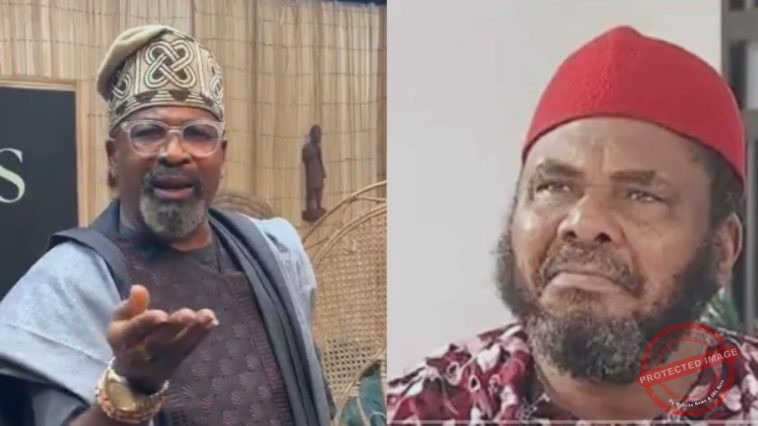
Veteran actor Yemi Solade has stirred nationwide controversy after boldly declaring himself a senior to legendary Nollywood icon Pete Edochie, while also insisting that Yoruba filmmakers not the Igbos founded Nigeria’s home video industry.
In a recently resurfaced video now trending on social media, Solade passionately asserted that despite Edochie’s fame and elder status, he (Solade) started acting in 1977, at age 17 five years after Edochie’s stage debut in The Merchant of Venice in 1962. Solade claimed his acting career spans 48 years and emphasized that seniority in Nollywood should be based on years in film production, not age.
Beyond personal career timelines, Solade ignited deeper cultural debate by challenging the widely accepted narrative that Nollywood began with the Igbo-led 1992 blockbuster Living in Bondage. According to him, Yoruba pioneers like Muyideen Alade Aromire and Ade Ajiboye had already launched the home video movement in the 1980s years before Living in Bondage ever hit shelves.
“It’s not true that Living in Bondage started Nollywood,” Solade said. “Yoruba filmmakers were already shooting on VHS, but we were poor at documenting our legacy, so others distorted the history.”
Solade credited Aromire’s 1988 film Ekun and Ajiboye’s Soso Meji as Nigeria’s first true home videos shot on VHS and distributed for home viewing, not for cinema or national TV. These, he claimed, laid the groundwork for what became Nollywood.
However, many online particularly from the Igbo community pushed back, citing historic works like Palaver (1926) and Daybreak in Udi (1949) as earlier examples of Nigerian cinema, albeit British-funded. They also pointed to the Igbo tradition of stage plays and storytelling that thrived from the 1940s through the 1980s.
Pete Edochie, they argue, was already a household name by the mid-1980s thanks to his powerful role as Okonkwo in the NTA adaptation of Things Fall Apart. Meanwhile, they argue, Solade was still building his career largely within Yoruba theater circuits.













 WhatsApp us