in

FG Introduces New Capital Requirement for DisCos in Sweeping Power Sector Reform

Minister of Power, Adebayo Adelabu, unveils major policy shift to strengthen the financial health of electricity distribution companies and attract private investment into Nigeria’s power sector.

Follow
( 0 Followers )
X

Follow

E-mail : *

The Federal Government has announced a new capital adequacy policy for electricity Distribution Companies (DisCos) as part of a comprehensive reform to strengthen Nigeria’s power sector.

The policy, unveiled by the Minister of Power, Chief Adebayo Adelabu, at the Nigeria Energy Forum held at the Landmark Centre in Lagos, mandates that DisCos must meet a minimum capital base to qualify for the renewal of their operating licenses.

According to Adelabu, the decision was driven by the persistent undercapitalization and high debt burden facing several DisCos, which have hindered efficient service delivery and financial stability in the electricity market.
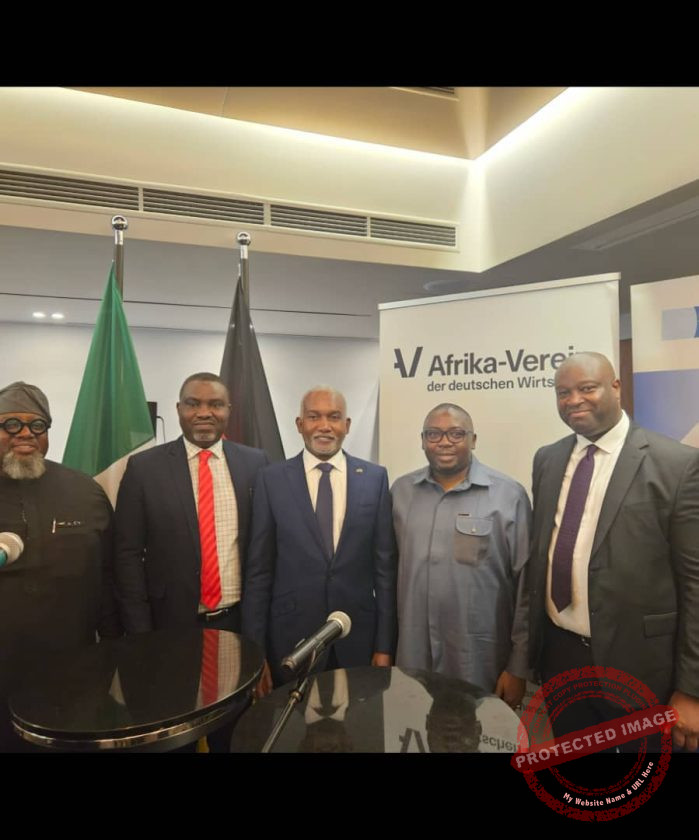



“As the tenure of their operational licenses approaches renewal, the government intends to introduce a minimum capital adequacy requirement as part of the license renewal process, to strengthen the financial health and liquidity position of the utilities,” Adelabu said.

He explained that since assuming office in 2023, his administration has implemented a multi-pronged reform strategy built around legislation, infrastructure, energy transition, policy updates, and local capacity development — all aimed at unlocking private capital and improving service delivery.

Highlighting key achievements, Adelabu noted that the Electricity Act 2023 has granted regulatory autonomy to 15 states, while the new Integrated National Electricity Policy—the first in nearly two decades—has been approved to foster a more liberalized and investment-friendly market.

The minister also disclosed significant progress on tariff reforms, which have helped stabilize the sector and boosted revenue by 70 percent to ₦1.7 trillion in 2024, with projections to exceed ₦2 trillion in 2025.

In a bid to address liquidity challenges, President Bola Ahmed Tinubu has approved a ₦4 trillion bond to clear verified debts owed to generation companies (GenCos) and gas suppliers, alongside a targeted subsidy framework to protect vulnerable households.

Adelabu further revealed that the government has secured ₦700 billion for the Presidential Metering Initiative, targeting the deployment of 1.1 million meters by the end of 2025, and signed contracts for Phase One of the Presidential Power Initiative (PPI), which will add 7,000MW to the grid.

He also confirmed the unbundling of the Transmission Company of Nigeria (TCN) into two entities — the Nigerian Independent System Operator (NISO) and the Transmission Service Provider (TSP) — describing it as a “long-awaited and critical structural reform.”

The minister concluded by calling on investors and private developers to seize opportunities in the Nigerian power sector, which he described as “open and ready for business more than ever before.”

“We have over 10 GW of stranded generation capacity — energy that can power industries, create jobs, and even support electricity exports to neighboring countries. The fundamentals are improving, and the government is fully committed to enabling long-term investment and innovation,” he added.

Follow Us on Social Media

Author

Written by Shola Akinyele

Nigeria Signs €21 Million Technical Partnership with Germany to Boost Energy Transition

Chukwuma Charles Soludo

Soludo Wins Landslide in 2025 Anambra Governorship Election, Secures Second Term for APGA